

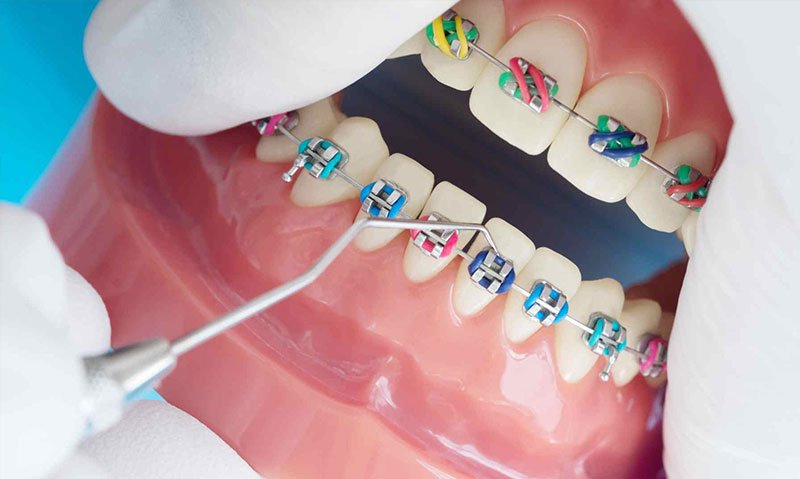
What are Braces?
What Are Dental Braces? Basic Definition and Purpose
Dental braces are appliances used in orthodontic treatment to correct the position of teeth and ensure proper alignment between the jaws. Put simply, they consist of small attachments called brackets that are bonded to the teeth and metal wires that connect these brackets, exerting a controlled force. These wires allow the teeth to gradually shift into the desired position over time.
The primary goal of braces treatment is not only to achieve an aesthetic appearance. When crooked teeth are straightened through braces treatment, maintaining oral hygiene becomes easier. Food debris accumulates less between properly aligned teeth, which reduces the risk of tooth decay and gum disease. In addition, malocclusions (bite misalignments) can cause jaw joint pain, difficulties in chewing, and even speech impediments. Braces treatment improves overall oral health and quality of life by eliminating these functional issues as well.
The Necessity of Braces Treatment: Who Is It Suitable For?
Braces treatment is a treatment method that can be applied at any age. However, starting typically during childhood and adolescence can yield faster and more effective results due to ongoing bone development. Braces treatment is also successfully performed on adults.
The main conditions requiring braces treatment include:
- Crowded/Misaligned Teeth: A condition where teeth overlap or have gaps between them instead of being in their proper position.
- Bite Misalignments (Malocclusions): When the upper and lower teeth do not meet properly upon closing. These conditions may include:
- Crowding: Teeth overlapping due to insufficient space in the jawbone to accommodate them.
- Open Bite: Front or back teeth not touching each other when biting down.
- Deep Bite: Upper front teeth excessively overlapping the lower front teeth.
- Crossbite: Upper teeth sitting behind the lower teeth.
- Underbite: The lower jaw protruding ahead of the upper jaw.
- Gaps in Teeth (Diastema): An abnormal amount of space between the teeth.
- Jaw Structure Problems: Discrepancies in the growth and development of the jaws can also affect the position of the teeth.
- Aesthetic Concerns: Dental or jaw-related issues that disrupt the aesthetics of the smile.
- Functional Problems: Dental misalignments leading to chewing, speech, or joint problems.
How Braces Treatment Works: How Does the Process Progress?
Braces treatment is a process that requires careful planning and execution. It generally includes the following steps:
1. Initial Examination and Diagnosis
The orthodontist thoroughly examines the patient's oral and dental health. At this stage:
- Patient history is taken (health status, previous treatments, complaints).
- An intraoral examination is performed.
- Necessary X-rays (panoramic X-ray, cephalometric X-ray) are taken.
- Dental impressions are taken (intraoral scanner or plaster models).
- Photographs are taken (intraoral and extraoral).
In light of this data, the patient's condition is evaluated, a diagnosis is made, and a treatment plan is created.
2. Creating the Treatment Plan
The orthodontist determines the best treatment method suited to the patient's needs and treatment goals. The treatment plan may include:
- The type of braces to be used (metal, clear, lingual, etc.).
- The estimated duration of the treatment.
- Additional treatments deemed necessary (tooth extraction, dental cleaning/scaling, etc.).
- Information is provided regarding expected outcomes and potential risks.
3. Applying the Braces
Once the treatment plan is approved, the application of braces begins. This generally involves the following steps:
- The tooth surfaces are cleaned and prepared with a special bonding agent.
- Brackets are precisely bonded to specific points on the teeth.
- The archwire passing through the brackets is secured using special elastic bands (ligatures) or the bracket's own locking mechanism.
- The thickness and flexibility of the wire used are specially chosen to direct tooth movement.
4. Follow-Up Appointments
Patients are checked regularly by the orthodontist throughout the braces treatment. These check-ups are usually conducted every 4 to 8 weeks. During the appointments:
- The force and direction of the archwire are adjusted.
- The wire is changed or additional appliances are added if necessary.
- Oral hygiene is inspected and necessary recommendations are made.
- The progress of the treatment is evaluated.
These appointments are critically important for the success of the treatment.
5. Completion of Treatment and Retention
Once the teeth have reached the desired position, the brackets and wires are carefully removed. However, the treatment does not end here. Retention (protective) appliances are used to ensure the teeth remain in their new positions. These appliances may include:
- Fixed Retainer (Internal Appliance): A thin wire bonded to the back surface of the front teeth.
- Removable Retainers (Plastic Appliances): Clear or colored aligners worn at night or during specific hours.
The retention period is determined by the orthodontist based on the patient's age, the severity of the malocclusion, and tooth mobility. This stage is extremely crucial for the longevity of the treatment.
Types of Braces: Which One Is Right for You?
Today, there are various options available in orthodontic treatment. Each has its own advantages, disadvantages, and aesthetic appearance. The most common types of braces are:
1. Metal Braces
This is the most classic and widely used type of braces. They are made of stainless steel. Their advantages include durability, efficiency, and generally more affordable cost. However, their visibility can be a drawback for some patients.
2. Clear (Aesthetic) Braces
Made from porcelain, sapphire, or composite materials, these brackets offer a more aesthetic appearance as they are closer to the color of teeth. They are less noticeable compared to metal brackets. However, they may not be as durable as metal brackets, and the treatment duration may be slightly longer.
3. Lingual Braces
Because these brackets are bonded to the back surfaces of the teeth, they are invisible from the outside. They offer a completely aesthetic solution. However, they may cause temporary speech difficulties, cleaning can be somewhat more laborious, and their costs are generally higher.
4. Clear Aligners (Aligner Treatment)
Instead of traditional brackets and wires, custom-designed clear plastic aligners are used over the teeth. These aligners are changed at specific intervals (usually every 1-2 weeks) to gradually move the teeth. Clear aligners are popular because they are virtually invisible, removable (while eating and cleaning), and cause less discomfort. However, they may not be suitable for every malocclusion, and the patient's consistent compliance in wearing them is essential for success.
It is important to have a detailed consultation with your orthodontist to determine which type of braces is best suited for you. Your specialist will recommend the most appropriate option based on your dental structure, the type of malocclusion, your aesthetic expectations, and your budget.
Which Type of Braces Might Be Right for You?
The table below compares some basic characteristics of different types of braces:
| Feature | Metal Brackets | Clear Brackets | Lingual Brackets | Clear Aligners |
|---|---|---|---|---|
| Visibility | High | Medium (Close to Tooth Color) | None (On the Inner Surface of the Teeth) | Very Low (Clear) |
| Aesthetics | Low | High | Highest | High |
| Cost | Generally Most Affordable | Medium-High | Highest | High |
| Durability | High | Medium | High | Medium (Can Break) |
| Comfort | Medium (Initial Discomfort Possible) | Medium | Initial Speech and Eating Difficulties Possible | Generally High (Removable) |
| Oral Hygiene | Requires Attention | Requires Attention | Can Be More Laborious | Easy (Removable) |
| Applicability | Suitable for All Cases | Suitable for Most Cases | May Be Less Suitable for Some Cases | May Not Be Suitable for Every Case |
Duration of Braces Treatment and Influencing Factors
The duration of orthodontic brace treatment can vary significantly from person to person. On average, the treatment period can range between 12 and 36 months. However, this period may be shorter or longer depending on the following factors:
- Severity of the Malocclusion: The degree of crowding or bite misalignment directly affects the treatment duration. More complex cases may take longer.
- Patient's Age: Because bone development continues in young patients, teeth move faster. For this reason, treatment time is generally shorter in children and adolescents.
- Treatment Method Used: While some types of braces (for example, lingual brackets or certain clear aligner systems) may take longer, others can yield faster results.
- Patient Compliance: Paying attention to oral hygiene throughout the treatment, following the dentist's recommendations (especially wearing aligners regularly for patients using clear aligners), and attending appointments without interruption positively affect the treatment duration.
- Individual Response of the Teeth: Every individual's dental tissue and bone structure are different. The response of teeth to treatment also varies from person to person.
- Additional Treatments: In some cases, additional treatments such as tooth extraction or jaw surgery may be required. These circumstances can also affect the treatment duration.
Your orthodontist will inform you about an estimated treatment duration after the initial examination. However, it is important to remember that this duration is an estimate and may change during the treatment process.
Benefits of Orthodontic Brace Treatment
The benefits provided by orthodontic brace treatment are not limited to aesthetics. This treatment has many positive effects on overall oral health and quality of life:
- Aesthetic Smile: The most obvious benefit is having a straight and harmonious smile. This increases a person's self-confidence.
- Improved Oral Hygiene: Properly aligned teeth make brushing and flossing easier. This reduces plaque buildup and lowers the risk of tooth decay and gum disease.
- Better Chewing Function: Bite misalignments can cause difficulties during chewing and imbalances in the mouth. Orthodontic treatment improves chewing function.
- Correction of Speech Disorders: Certain dental position anomalies can lead to speech problems, such as a lisp. Treatment can help correct these issues.
- Reduction of Jaw Joint Problems: Bite misalignments can affect jaw joints (temporomand